The Big One

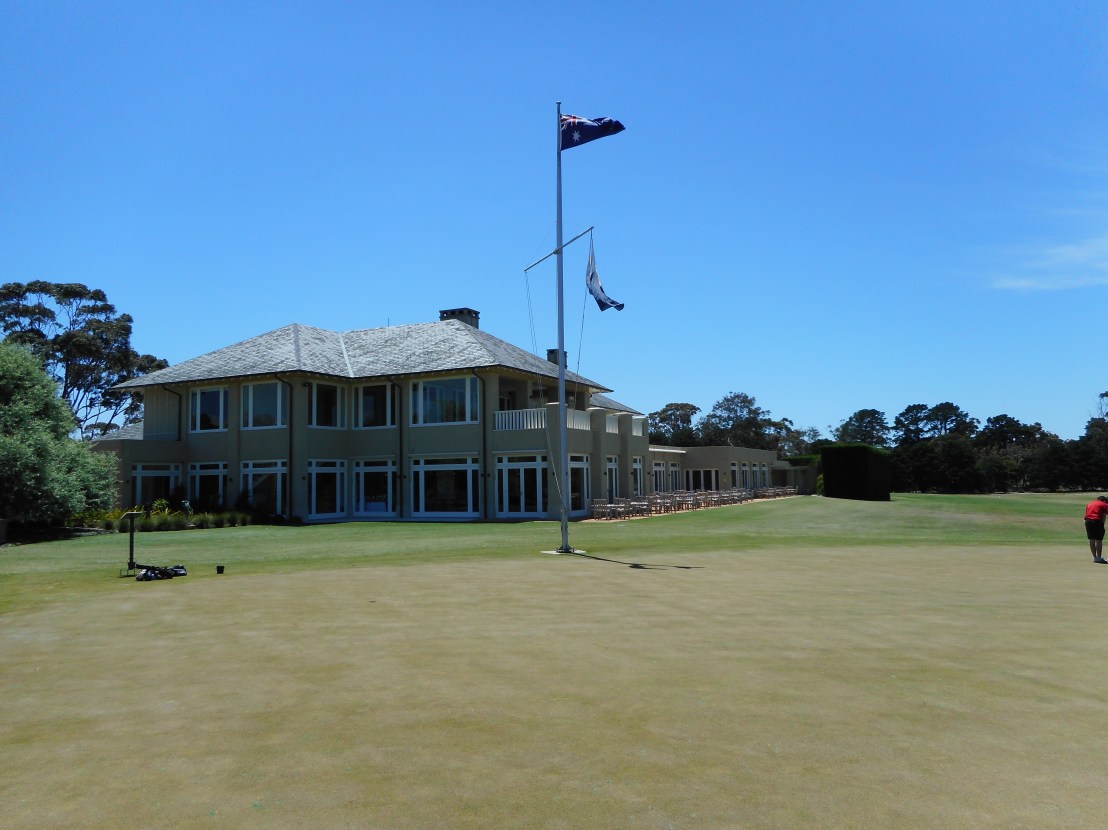
DSCN0366.JPGThe Clubhouse from the Putting Green

There cannot be any doubt that, for any golfer preparing for a visit to Australia that includes a visit to Royal Melbourne, that visit will be anticipated as the highlight of the visit.  That wasn’t any different for me ahead of this trip.  I was lucky enough that a good American friend of mine, John, had introduced me to Matt, a member at Royal Melbourne and yesterday was to be the day we played there.

Royal Melbourne has two courses, the West and East.  The West is generally regarded as the superior course and is frequently ranked in the top 10 courses in the world.  When professional events and major amateur events are held at Royal, a Composite Course, comprising holes from both courses (but mostly the West) is used.  Most recently the President’s Cup was played there in 2011 and the Women’s Australian Open in 2012.  The design of the West Course is attributed to Alistair Mackenzie, though construction was supervised by Alex Russell, an Australian professional golfer and Mick Morcom, head greenkeeper in 1931.  It is widely regarded as one of the finest examples of strategic golf course design in the world.  It is renowned for its firm and fast greens, which can make it extremely tricky to play, especially in wind.

I mentioned in a previous post that having been so aware of New South Wales’ drawbacks had meant that I had not concentrated on what made the course great in advance, so it far exceeded my expectations.  I was just a little concerned that, being so aware of Royal Melbourne’s strengths, I may be disappointed.  I was also aware that one or two people I had spoken to over the past couple of weeks had expressed the, almost heretical, opinion that, in fact, Kingston Heath was the better of the two most prestigious Sandbelt courses. How would I find Royal Melbourne?
DSCN0373.JPG

I arrived before Matt and spent some time (and a bit of money) in the pro-shop and then went and hit a few balls and had a putt.  When Matt arrived, he showed me around the clubhouse.  As a club Royal Melbourne is, naturally, extremely proud both of its reputation and its history and much of this is on display in various rooms in the clubhouse.  More importantly, it was really obvious to me as Matt showed me around, that this was a real club.  The staff all greeted Matt by name and there was evidence in the dining room of gthe regular Thursday “wets” competition, where members meet, have a good lunch and some excellent wine and then go out and play.  The club was busy and, indeed, so was the West Course.  While we waited for the course to clear a bit, Matt and I went and walked round and I played some of the East Course holes, including those used in the Composite.

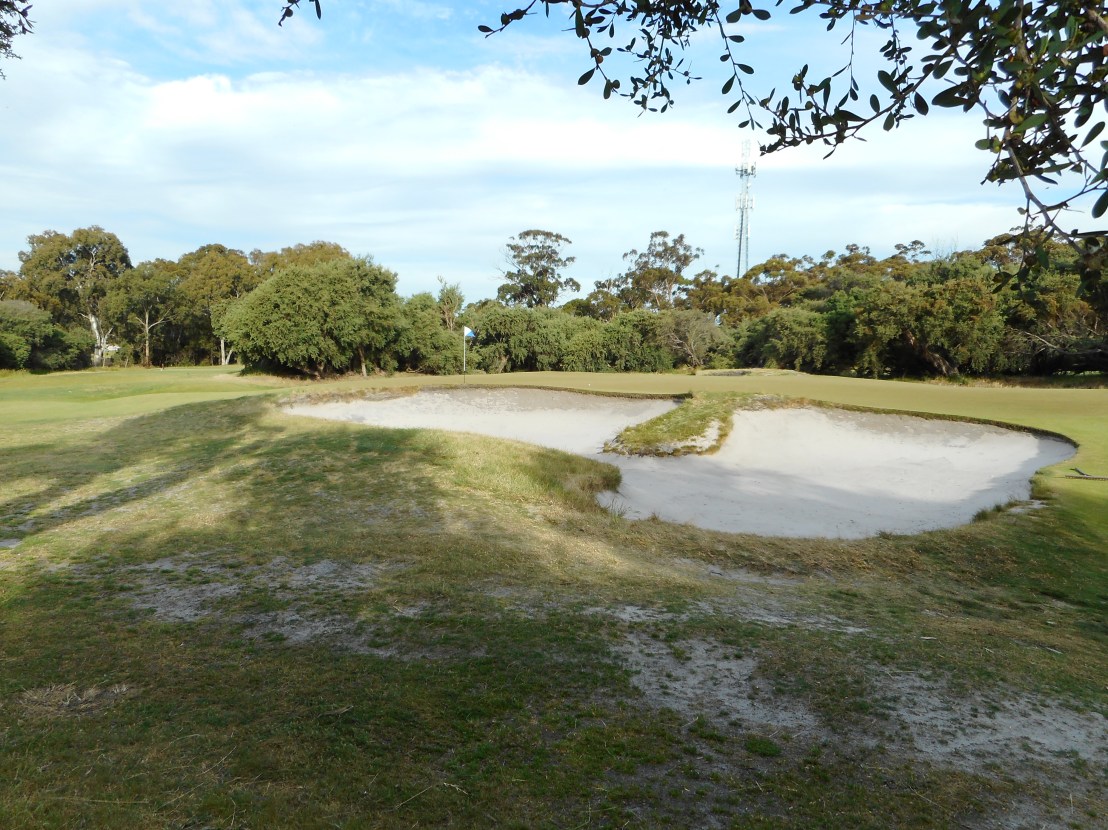
I started off striking the ball well and the strategic nature of the East became rapidly apparent.  As did the difficulty of controlling the ball on these greens.  After a while, we returned to the West first tee and set off.  It isn’t, as I have said, my intention to turn this blog into a hole by hole analysis of golf courses.  Suffice it to say, then, that RMW is as brilliantly strategic as I had hoped.  On every shot, it seems, there are decisions to be made.  There are hazards which, approached closely give the player an easier (sometimes much easier) next shot but if entered will likely cost a shot.  Meanwhile wide fairways and large greens allow safe bail outs which leave significantly harder consequent shots.  The greens require incredible precision, get out of position and holding them can be next to impossible.  Leave the ball in the wrong place on the greens and two putting, whilst possible, will be extraordinarily difficult.

Melbourne had thrown up the hottest day since I arrived in Australia and I made the mistake of failing to take on enough water.  I tired a bit and my golf became sloppy.  Not a good recipe on a course like this.  Nonetheless, RMW was a brilliant experience.  One of the very best courses I have ever played.  Matt is a keen botanist and, as we went round, he showed me various species of indigenous  plants that the club was planting on the course. Like Kingston Heath, Royal Melbourne takes the appearance of the course and its surrounds extremely seriously.

If I was to identify one flaw at RMW, it would be the grass used on the fairways.  I have heard more conversations about grass species in Australia than in my entire life.  In this climate, it is not enough, as we do at home, to simply leave the grass alone, perhaps fertilise it a bit and put some water on if it is getting too dry.  The summer temperatures do not allow that simple approach.  Royal have seeded their fairways with a species known as Legend Couch.  It is broader leafed than the couch used at Kingston Heath.  This means that it is thicker and slows down the bounce and roll of the ball.  It also means that the beautiful tight fairway lies at KH are not replicated here, the ball sitting up just a bit more than ideal.  Since Legend grabs bouncing balls, you cannot bump and run the ball in on it.  To allow this to be done, a different strain is used on the aprons between fairway and green.  This not only look odd but made, I found, for uncertainty in approaches from relatively short distance.  I’m certain that set up like Kingston Heath, RMW would be even better than it is now.
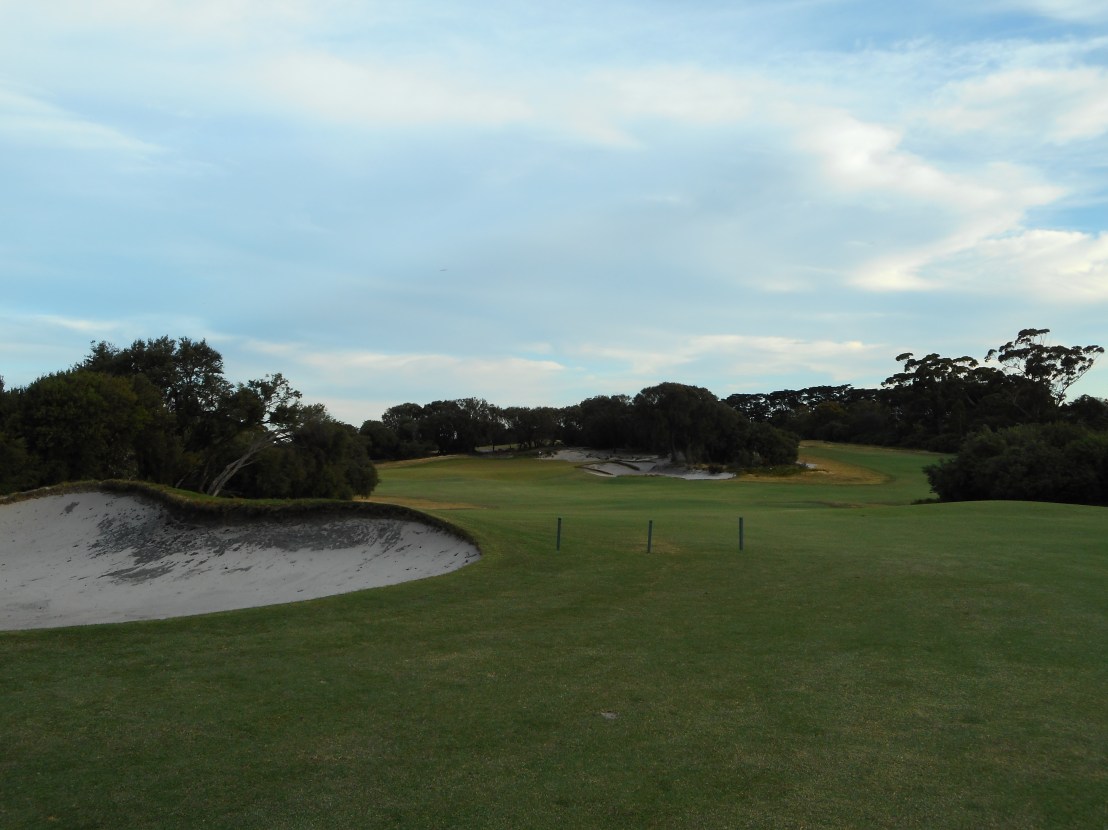
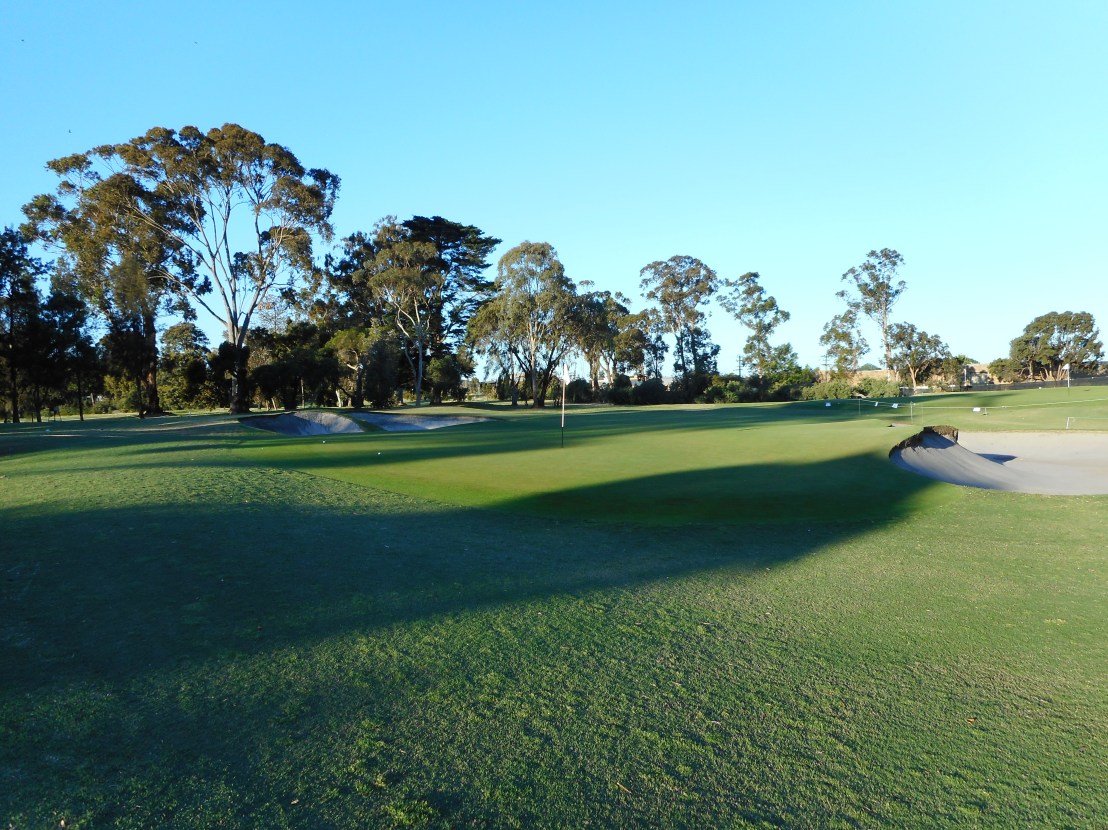
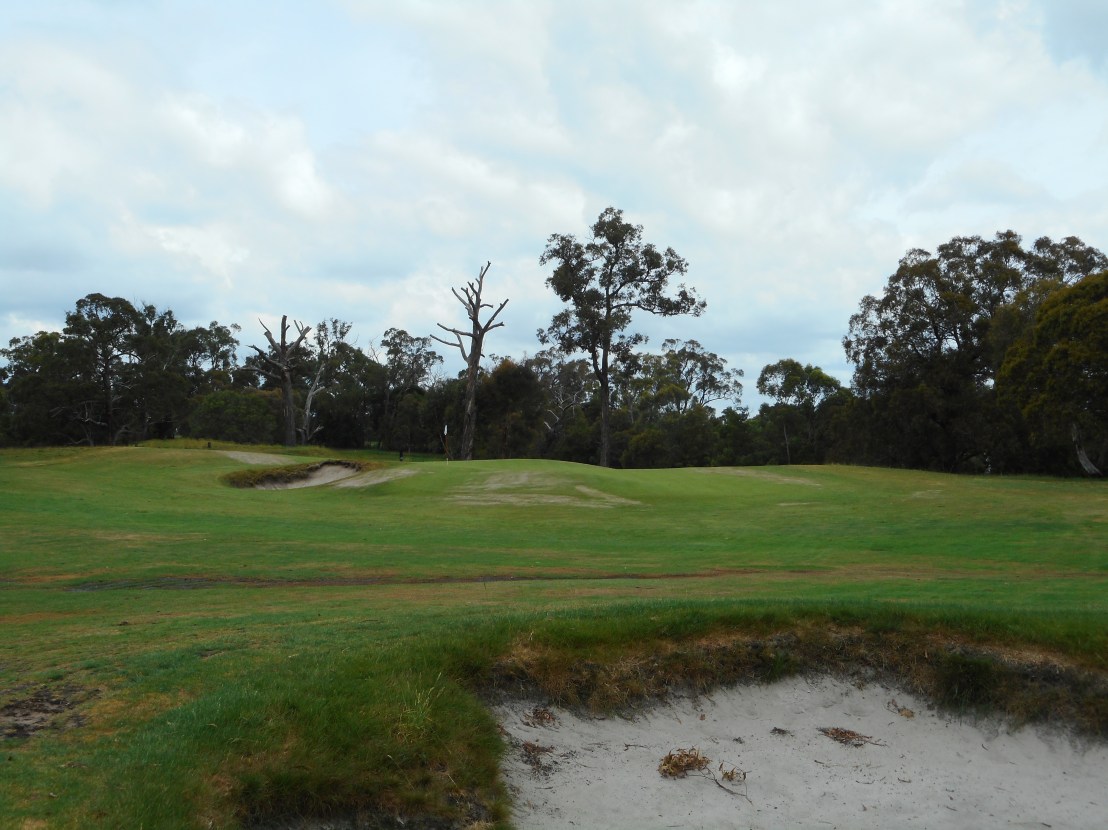
DSCN0375.JPGOne great aspect of all the Sandbelt courses so far has been the way bunkers have sharp edges with the green or fairway, with no collar of longer grass.  That sharp boundary contrasts neatly with the way bunkers transition easily from bunker into sandy waste into waste area.

I feel privileged to have played RMW which is, without doubt, one of the greatest courses I have played.  It is, I think, the best of the courses I have played here so far though in saying that, I’m surprised by how close Kingston Heath comes to being its equal.
Commonwealth

DSCN0362.JPG

I had corresponded with Chris a number of times on a golf architecture forum, GCA but we had not met.  He is qualified as a lawyer but works as a lobbyist and is a member at Commonwealth, another of the Melbourne Sandbelt clubs.  We had arranged to meet just before 5pm and would play as many holes as we had time for.  Fortunately, as it turned out, the course was empty (though a handful of serious players were on the practice ground when we set off and a couple still at it when we finished) and we flew round, so managed to get all 18 in as the shadows lengthened.

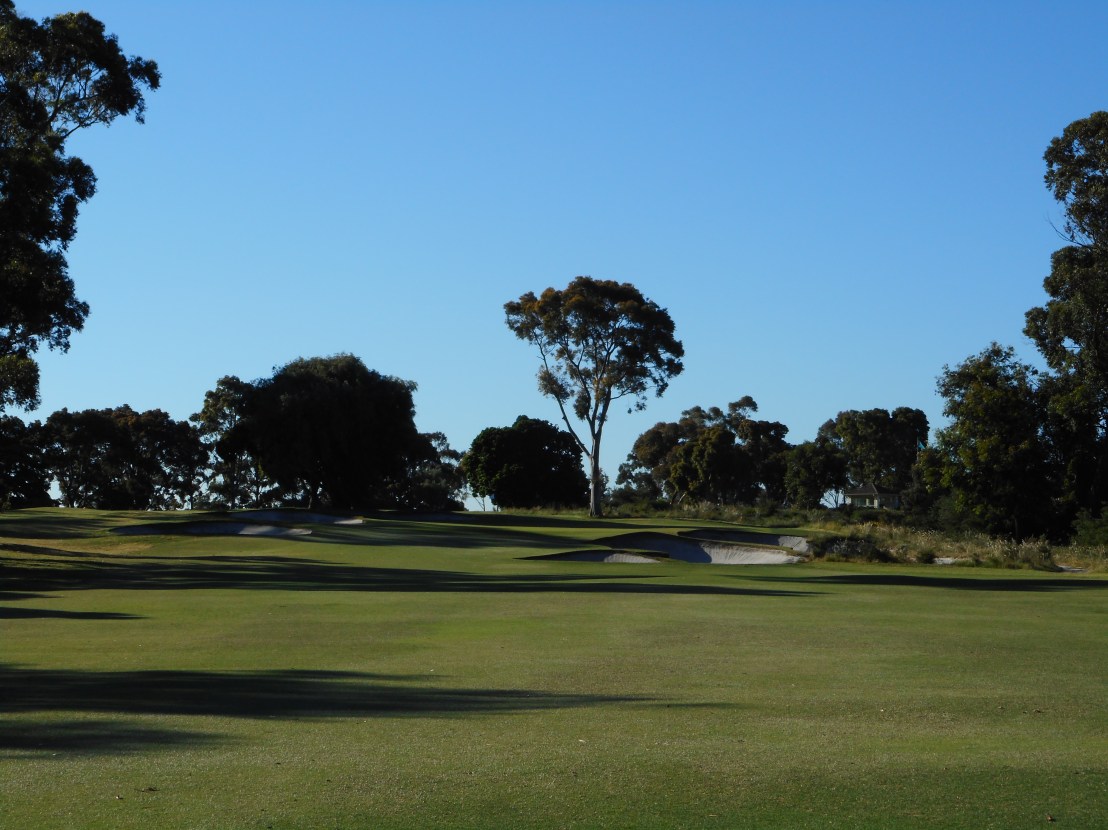
Chris explained that, perhaps 30 years ago, Commonwealth had been seen as being on the same level as Royal Melbourne and Kingston Heath but had slipped from that level, partly because those courses had improved conditioning and presentation and made small improvements, whilst Commonwealth had made some major changes, designing new holes and replacing old ones.  Tellingly, as we played I started to be able to spot the new holes and the old ones just from playing them, without any clues from Chris.  The old ones made strategic sense and, as I said on the 14th: “this must be an old hole, the bunkers are all in the right places”.

Some recent work had been done to start bringing Commonwealth back to the level its best holes deserve by Mike Clayton’s firm again.  Clayton’s style at Healesville and Bonny Doon is dramatic and not at all like the relatively flat subtlety of the Sandbelt.  Impressively, the work he has done here is very sympathetic, to the point that there was nowhere that it was obvious where new work had been done (except for the construction of new tees in places, which are still growing in).  It is clear that Clayton’s work has improved the course, which makes it all the sadder that the improvements have been cancelled because of opposition from some members, who like the over-treed, bland nature of some of the newer holes.

The best holes at Commonwealth (8 is a lovely uphill par 4, 9 a great short to mid length par 3 with a wicked green and the last half dozen have a great flow to them) are very good indeed.  Such a shame that in the arms race to be the top Sandbelt club changes were made here to the detriment of the course.

The 3rd and 16th share a water hazard (apparently American architect Tom Doak described the 16th as the greatest inland par 4 with a water hazard in golf, that may be too much but it is bloody good, the closer to the water you drive, the easier a second shot you leave) and this chap and his family were out enjoying the evening sun:DSCN0360.JPG

We played quickly but found time to chat about the state of Australian cricket (for an Englishman can there ever have been a better time to be in Australia), which is the subject of national handwringing, Donald Trump and Brexit.  A great way to spend an evening and I look forward to catching up with Chris again for dinner tonight.DSCN0363.JPG

The 14th green as sun sets and just before I hole my birdie putt

Rest, at last

DSCN0350.JPG

After a long, frustrating and quite tiring day on Monday, less than 5 hours sleep that night, and early start on Tuesday, the drive to Healesville and back and 36 holes of golf, I was delighted this morning to be able to have a lie in and take my time getting going.  I wasn’t due to play golf today until 5pm.

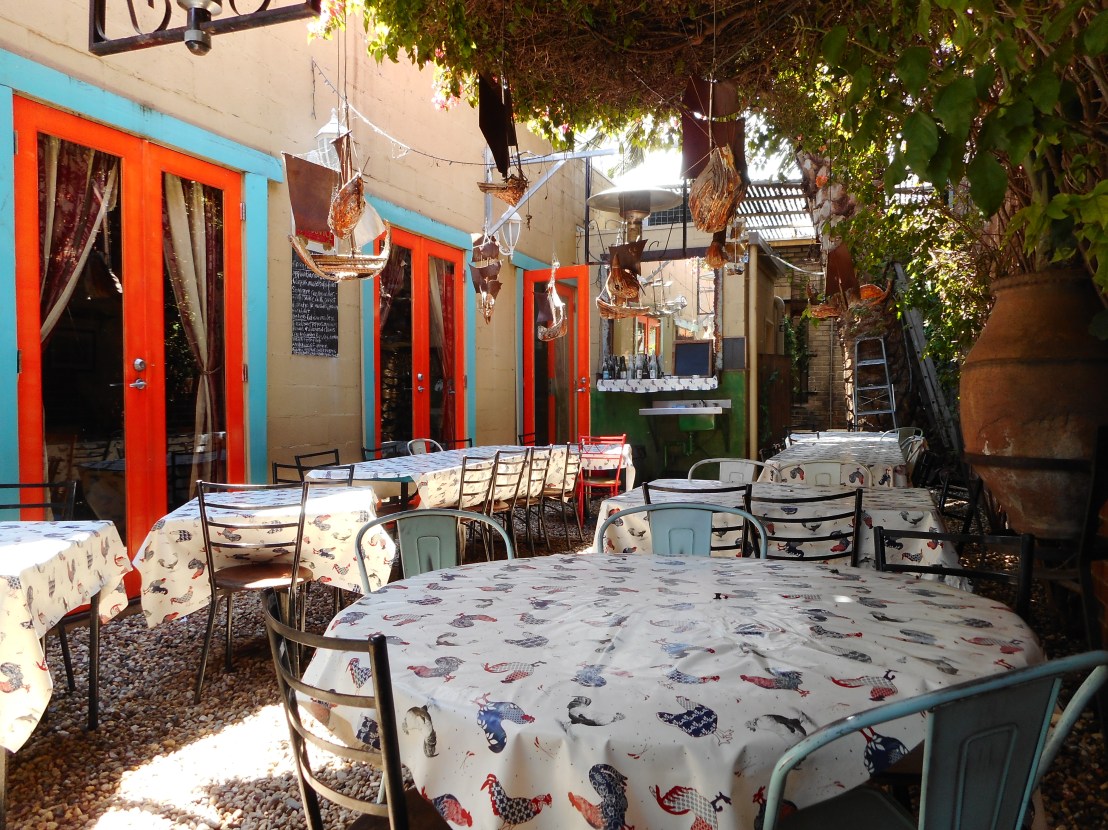
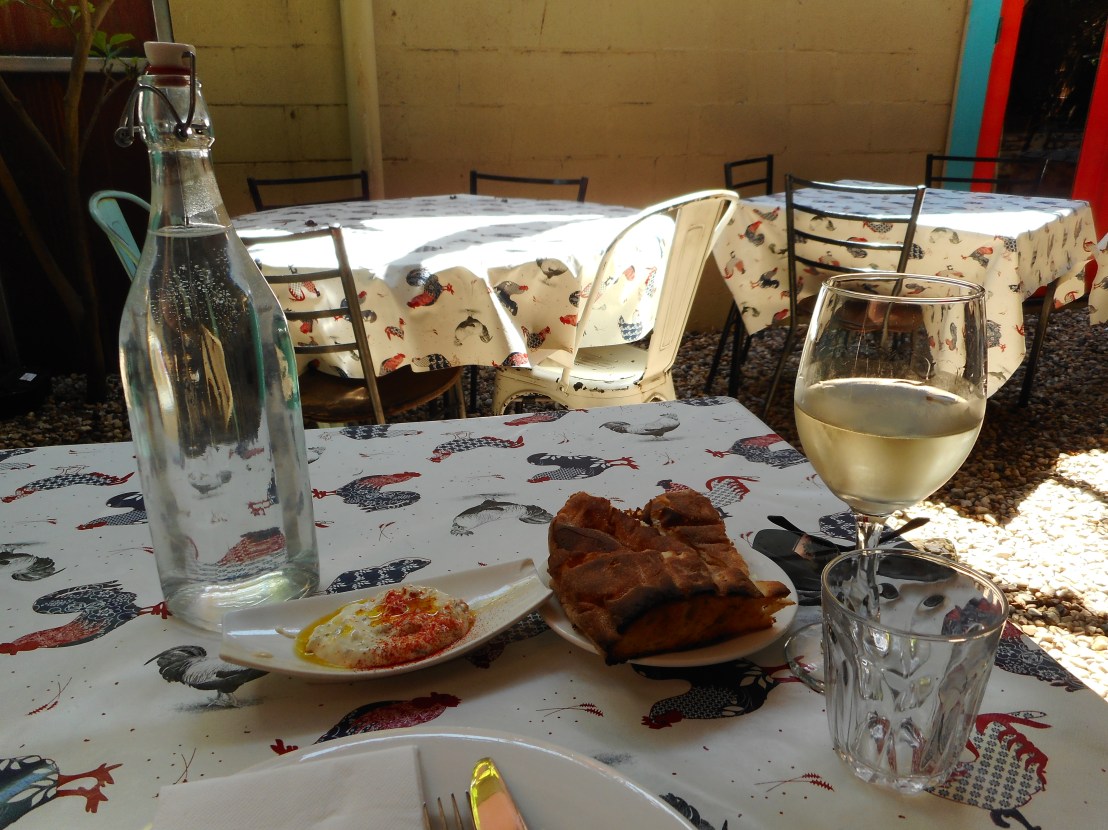
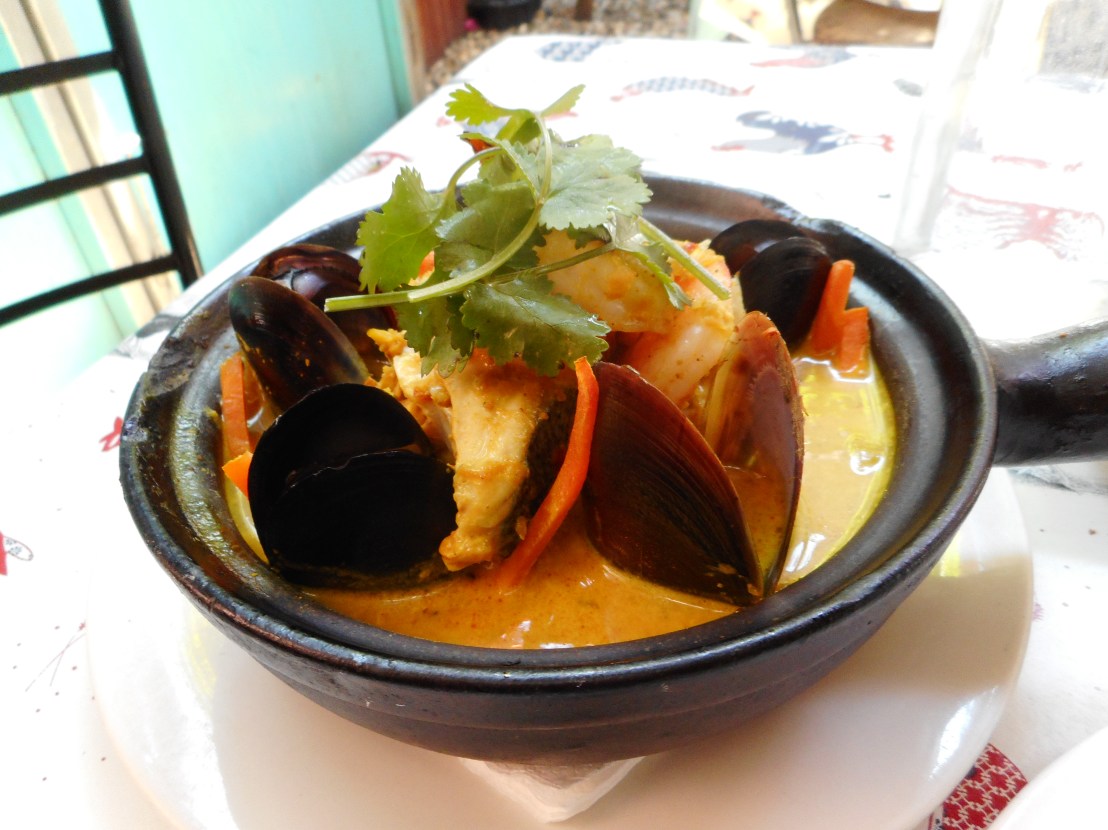
After getting up I had a cup of coffee and a long chat with Karen, Peter’s wife, in the AirBnB and decided that I’d spend the first part of the day having a stroll around the Melbourne suburb of St Kilda and have lunch there, too.  After a bit of research I decided to head for Claypots, a seafood restaurant in St Kilda.  Claypots (above) offers a variety of seafood but is known for dishes cooked in, you guessed it, claypots.  I chose the Singapore, which included rice, a Lakhsa style sauce and a mountain of fish, prawns and mussels.  First, though, I was given some wonderful, freshly baked bread and a delicious tatziki style dip to accompany a very pleasant glass of Pinot Gris from the Mornington Peninsula.DSCN0352.JPG

And then the claypot:DSCN0353.JPG Delicious and, at $43 for the food and two glasses of good wine (a glass of very good Chardonnay from  the Mornington Peninsula went really well with the claypot) possibly the best value meal I have had in Australia.
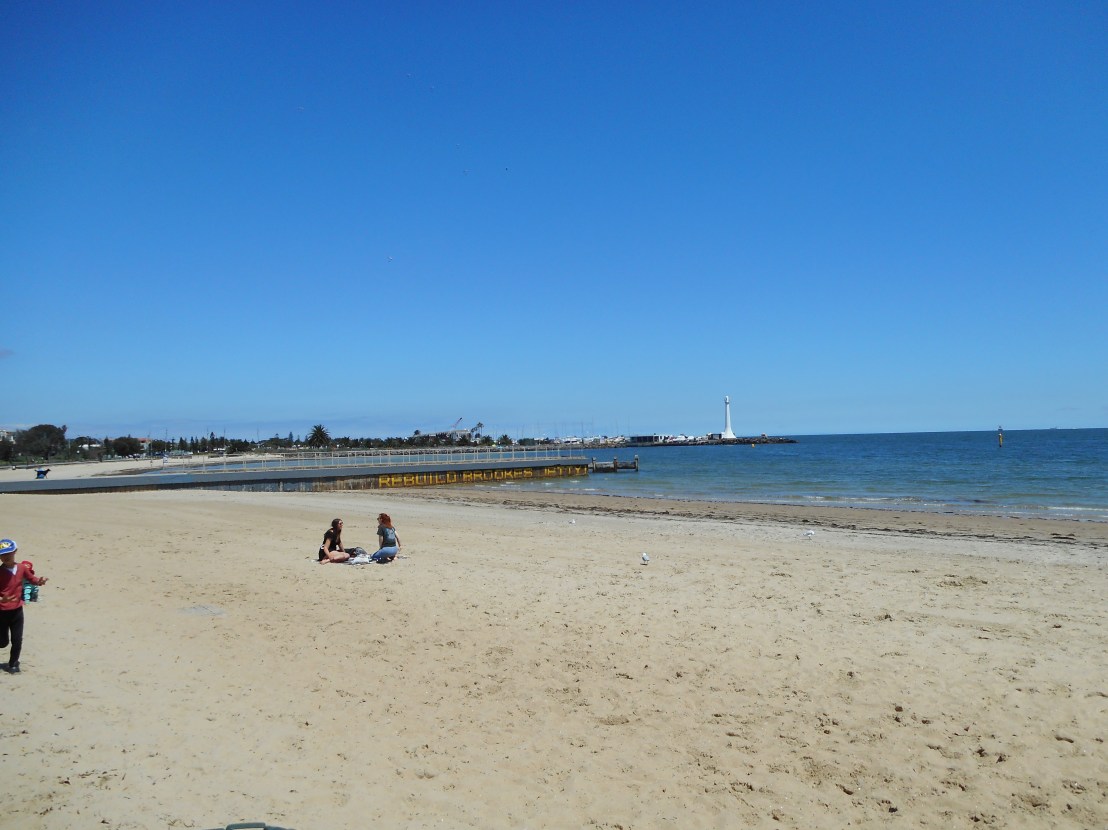
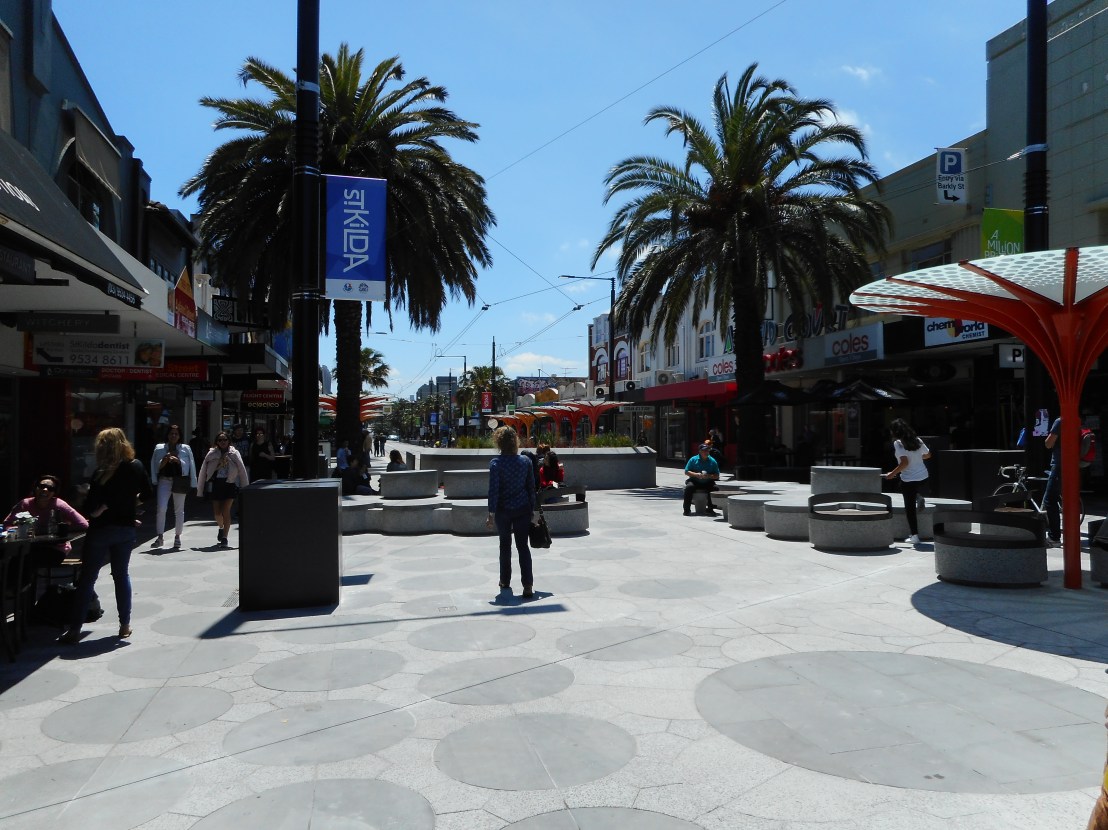

After lunch I strolled round St Kilda.  It’s a seaside suburb (though the beach was the least impressive beach I have seen over here):DSCN0358.JPG

The town, however, looked great fun.  Acland Street (just round the corner from the restaurant) was colourful and had several of the fancy cake shops and bakeries for which St Kilda is, apparently, well know:DSCN0354.JPG

and I saw my first Christmas tree of the year:DSCN0355.JPG

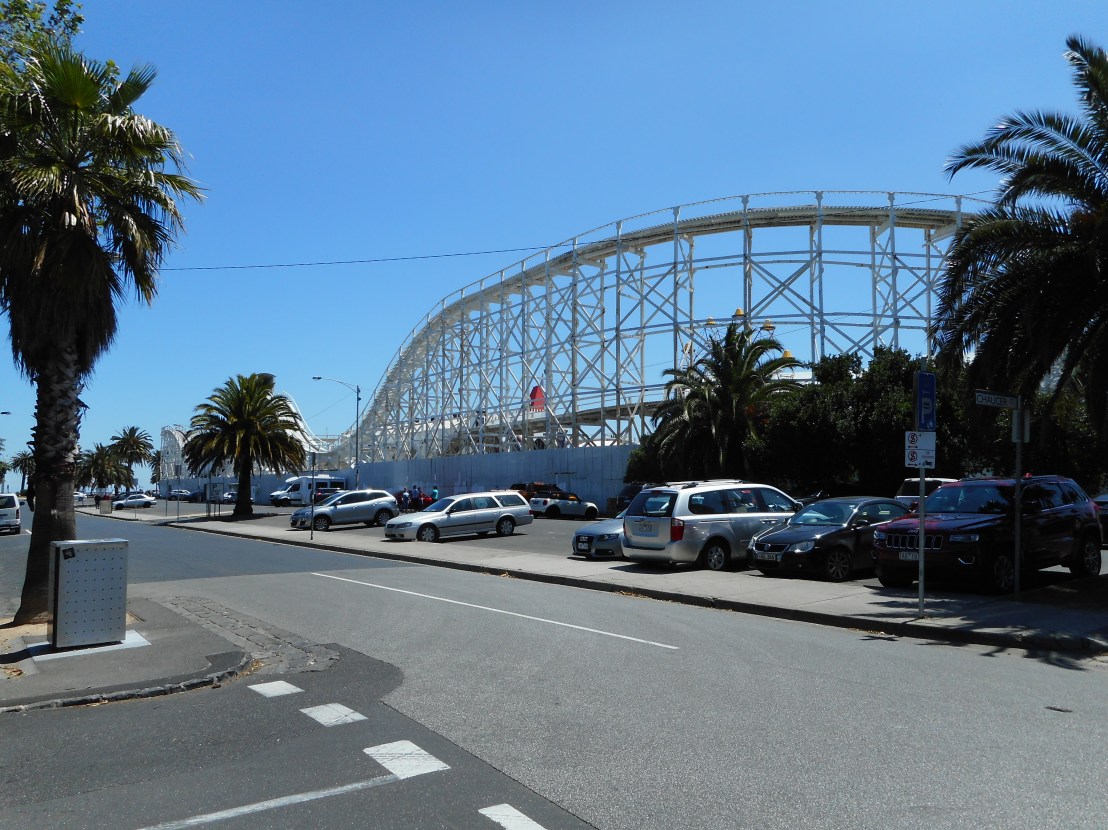
My stroll took me past the funfair and rollercoaster:DSCN0356.JPG

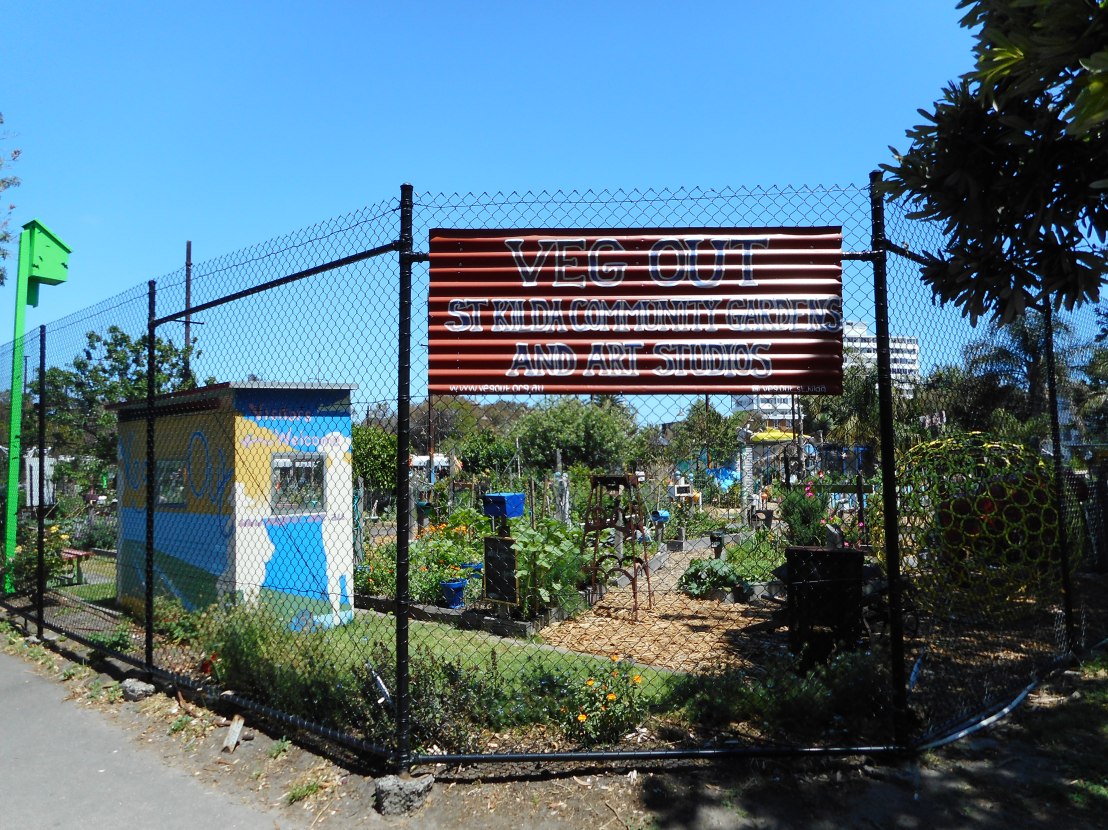
directly opposite this rather odd combination:DSCN0357.JPG

Community Gardens and Art Studios

I liked St Kilda (I returned in the evening for dinner) and look forward to seeing more of it tomorrow when a few of the blokes I’ve played with in Melbourne and I are having dinner there.

Healesville

DSCN0345.JPG

I had been due to play at RACV Healesville on Monday afternoon with David.  Quantas had put a stop to that.  Happily, however, David was able to play on Tuesday afternoon, too.  After a very pleasant lunch at Kingston Heath I set off to the town (village?) of Healesville, in the Yarra Valley.  The Yarra Valley is one of Australia’s better known wine regions and the drive was, towards the end, punctuated by passing well advertised wineries.  The area was hilly, as most wine regions are, and very green.  Really a very attractive area.

RACV are the initials of the Royal Automobile Club of Victoria.  Rather like the British RAC they have made very significant money from roadside assistance and insurance.  Unlike the UK RAC these profits have accrued to what is Australia’s wealthiest private members club.  The club has a number of sites with, effectively country club facilities, as well as a property in Melbourne.  At Healesville the country club has a very modern building and a golf course that was recently extensively remodelled by Mike Clayton, who is also doing the renovation at Bonnie Doon.  The course is interesting and controversial in golf architecture circles.  At 4800 metres (5300 yards) and a par of 66 it is very short by modern standards.  It also features some substantial elevation changes and has some dramatic greens.

I had read that there were conditioning issues at Healesville and that the course can be wet, so that it really plays best in the summer and autumn, rather than the spring (which it is now).  On arrival I met David and the first thing he did was apologise for the condition of the course.  Indeed, the first fairway (which I managed to avoid making any real use of, anyway) was a real mess, a mixture of grasses and mud patches.  David explained, as we played, that the superintendant (head greenkeeper) had attempted to change the grass on the fairways from that seeded by Clayton to couch, a variety commonly used in Melbourne (indeed, Kingston Heath has couch fairways).  Melbourne is much warmer and drier than Healesville, however, and the couch grass was not growing well.

The conditioning issues are a real shame for what should be an important golf course.  In an era where there is a mad race to longer and longer courses, the construction of a 5300 yard course is a brave move.  Long courses use more land, require more mowing, more irrigation, more upkeep generally and take longer to play than short ones.  Cost and the time it takes to play are major disincentives to players taking up the game and of players not playing as much as they might (or, perhaps, at all).  Healesville didn’t actually feel that short.  There are more par 3s than usual, which helps and the par 5s are not long.  The soft fairways will also have made it feel a bit longer than it would when dry.  The main interest, however, comes from the dramatically contoured greens:DSCN0343.JPG

These are also where the conditioning is the biggest issue.  If firm and reasonably paced, these greens would be not only really challenging to chip to and putt on but would also be great fun.  The softness and relative slowness of them removed much of that interest, though not all.

I’d love to see Healesville in really good nick, it would be a blast to play.

After a quick beer at the club, David and I headed back to Melbourne, stoppng on the way for a bite to eat at a local brewery.  Like Tasmania it seems that wineries, breweries and distilleries all coexist in the same areas.